
How to Glaze with Acrylic and Oil Paint
Unlocking the Secrets of Glazing: Mastering Light, Depth, and Color Like Vermeer
Have you ever marveled at the luminous glow of Vermeer’s portraits, the richness of his fabrics, and the mesmerizing depth of his scenes? A key ingredient to his magic is glazing. This deceptively simple technique transcends mere colour mixing, unlocking a world of light, depth, and nuance in your oil and acrylic paintings.

Share This
Story
Linkedin-in
Facebook-f
Instagram
Twitter
Bullhorn
Unlocking the Magic of Transparent Layers. Where Light Dances with Color
Imagine this: sunlight streams through a stained-glass window, casting jewel-toned hues upon the scene below. That, my friends, is the magic of glazing. This painting technique isn’t just about adding color; it’s about conjuring light itself.
In simpler terms, here’s the trick:
- Thin and transparent, a glaze dances over an opaque layer beneath. Think of it as a whisper of color, not a loud shout.
- Light plays hide-and-seek, weaving through the glaze and bouncing off the solid base. This creates a luminous glow, a depth unlike any flat color can achieve.
- Skin tones sing, their complexities emerging with each delicate layer. Glazing brings life to faces, capturing the subtle flush of cheeks and the gentle shadows of age.
Spread the love!
Pass this along to someone who’d appreciate it.
Transparency & Pigments
Not all colours play equal! Certain pigments, like Rose Madder Lake and natural Ultramarine Blue, possess inherent transparency, allowing the underpainting to shine through and create unique depths.

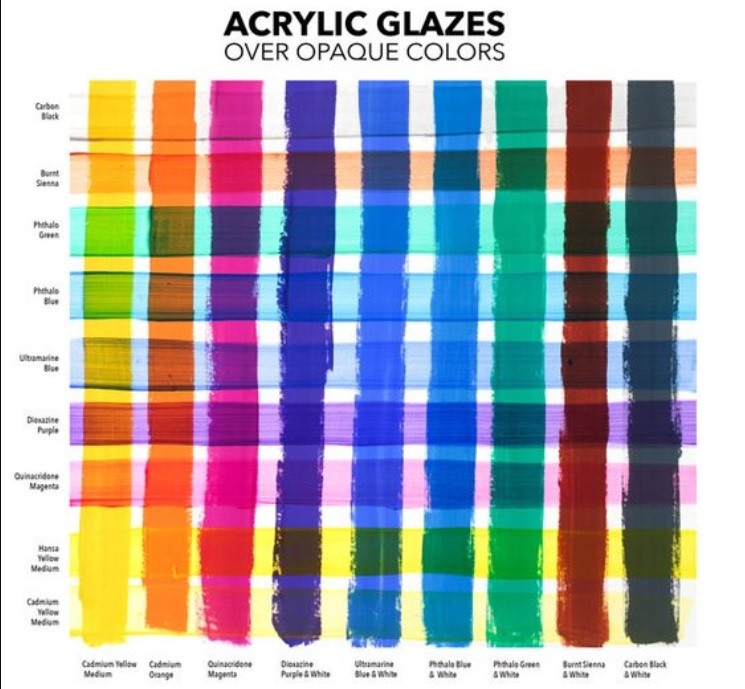
Layering with Precision
Each layer of glaze builds upon the last, demanding a steady hand and a keen eye for colour interaction.
Too thick, and you lose the effect; too thin, and the magic fades.
Understanding Paint’s Opacity: Glazing vs. Covering Power
The world of painting unfolds like a magician’s deck, revealing secrets with every stroke. One key trick? Knowing your colour’s transparency. Paints fall into two main categories: covering and glazing.
Covering Colours: These are your workhorses, the solid blocks of colour that build the foundation of your painting. Titanium White, for example, always hides what’s beneath it, no matter the brand. These paints have strong covering power, meaning they effortlessly conceal the layers below.
Opaque Colours:
- Cadmium Yellow
- Cadmium Red
- Cerulean Blue
- Naples Yellow
- All Whites


Glazing Colours
Think of these as delicate veils, enhancing and transforming what lies beneath. Their weak covering power makes them transparent, allowing the undertones to peek through and create enchanting depth. Indian Yellow, for instance, remains translucent even thickly applied, casting a warm glow upon its canvas.
But wait, there’s more! Layering these transparent veils unlocks even deeper secrets:
- Colors waltz in harmony, their interactions creating new shades and nuances unseen before. Each layer adds a whisper, blending with the layers beneath in a breathtaking tapestry of light.
- Patience is key, for each glaze must dry before the next waltz begins. It’s a slow dance, but the result is a masterpiece woven with time and care.
- Fat and lean become a tango, with each glaze layer receiving a touch more oil, gliding smoothly over the canvas. It’s a delicate balance, ensuring vibrancy without drowning the light beneath.
Glazing is more than just a technique; it’s an invitation to explore the unseen, to capture the subtle dance of light and color. So, grab your brush, embrace the slow waltz, and watch your paintings transform into luminous whispers of art.
Unlocking the Magic
- Please read the label: It’s your map to transparent land! Look for keywords like “glaze” or “transparent” to identify these subtle performers.
- Experiment and memorise: Each brand offers its twist on colour characteristics. Play with different paints, observe their transparency levels, and build your personal colour encyclopaedia.
- Embrace the duality. Don’t fear the darkness in some transparent. Use their depth to add character and dimension to your work.
By understanding the secret language of your paints, you unlock a whole new realm of artistic possibilities. So, grab your brush, explore the world of opacity and transparency, and paint your masterpiece with layers of light and wonder!


Additional Tips
- Remember, mixing transparent and opaque colours often leads to more opaque results.
- Layering thin glazes over each other creates stunning multi-dimensional effects.
- Use white gesso or light-toned underpainting to enhance the brilliance of your transparent colours.
With these tips in your pocket, you’re ready to unleash the full potential of every colour in your palette. Happy painting!
Ask a Question on our Online Community:
Looking for artistic camaraderie and tips on colour mastery? Join our vibrant online community, Art Club and share your experiences!
Similar Blogs

Unlock the Art of Glazing: Transforming Canvases with Light and Luminosity
Explore the captivating world of glazing at Lifeart School, where…

Color Mixing Tips: Unleash Your Artistic Palette
Struggling to mix colors for painting? This beginner’s guide covers…

Colors that dance together, Ultramarine Blue and Burnt Sienna
Discover the enchanting harmony of Ultramarine Blue and Burnt Sienna,…