
ART HISTORY
History of the Printing Press: How One Machine Changed Art Forever
(Without Losing Your Mind)
The history of printing press is a massive saga stretching from ancient seals to the mechanical marvels
The history of printing is a massive saga stretching from ancient seals to the mechanical marvels of the Renaissance, serving as the absolute, non-negotiable spark for the visual world we live in today. While popular folklore forces us to picture Johannes Gutenberg standing completely alone in a dimly lit German shed inventing reading from scratch, the actual historical roots of this technology were flexing their muscles way earlier in the East.
Let’s break it down.
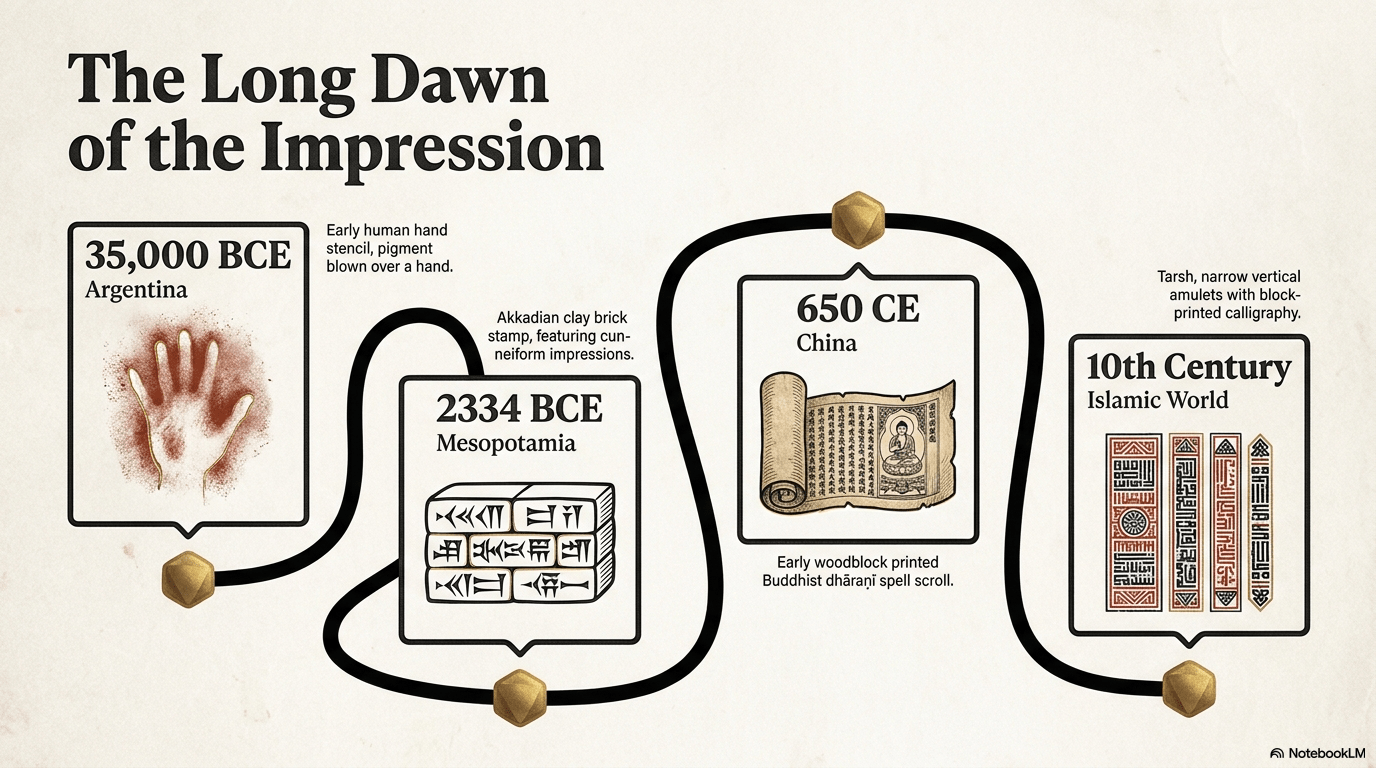
Here’s the timeline in a nutshell:
It’s a global relay of innovation — East to West — with each culture adding its own genius.
🤫
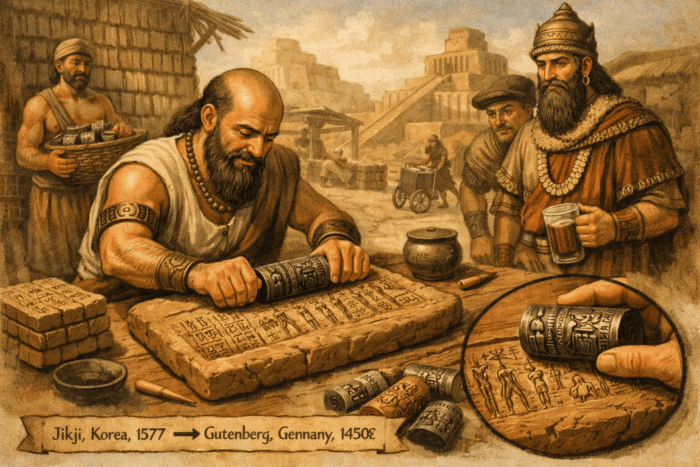
Mesopotamia – 4th Millennium BCE
Cylinder seals were used to stamp images and
inscriptions into clay — the earliest known form of “printing.”
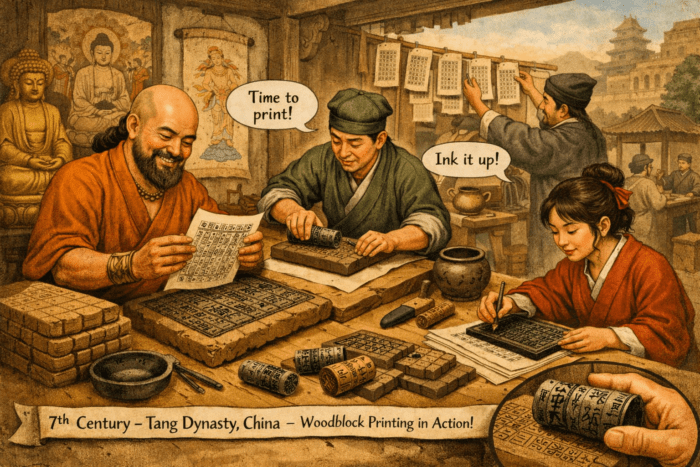
7th century – Tang Dynasty, China
Woodblock printing took off, enabling entire pages of text to be reproduced on paper. This was revolutionary for spreading literature and Buddhist teachings.
1377 – Korea: The Jikji
A collection of Zen Buddhist writings, became the world’s oldest surviving book printed with movable metal type — predating Gutenberg’s press by nearly eight decades.
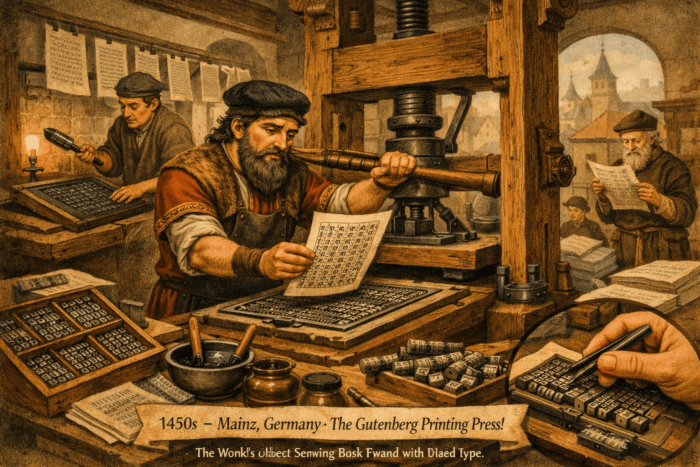
1450s – Mainz, Germany
Gutenberg refined the process with his mechanical press and oil-based inks, sparking Europe’s print revolution.
Gutenberg’s “Aha!”
(And Wine-Induced) Moment
So what exactly did our favorite mid-15th-century German goldsmith Johannes Gutenberg actually
achieve? Instead of inventing print out of thin air, he became the ultimate system engineer of
communication. He looked at the existing industrial tools of his era and executed a brilliant remix. Using
his specialized goldsmithing knowledge of metallurgy, he perfected a highly durable, top-secret alloy of
lead, tin, and antimony to cast individual letter blocks that wouldn’t smash under heavy pressure.
Then came the true stroke of genius: he walked over to a local agricultural screw press—machinery built
strictly for squashing grapes into wine—and adapted it to smash ink onto paper with perfectly uniform,
high-mechanical pressure. The result? The instant mass production of identical pages, forever ending
the agonizingly slow, error-plagued era of exhausted monastery scribes who were one blurry eyesight
tremor away from changing historical text entirely.
The Protestant Reformation
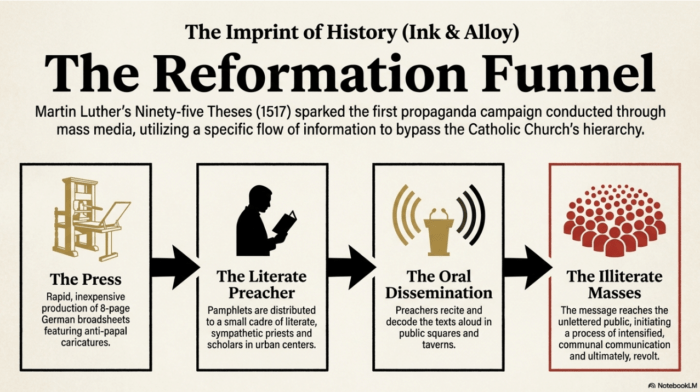
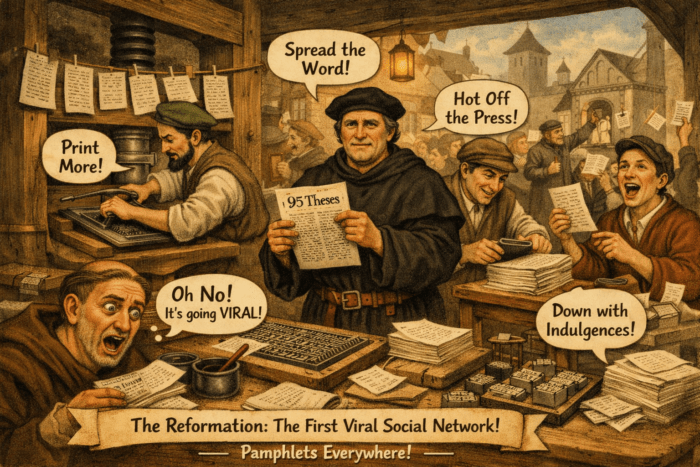
The printing press essentially acted as the world’s very first viral social network. Martin Luther’s provocative theological ideas were instantly turned into mass-produced pamphlets. The raw statistical proof is staggering: European cities that had established a printing press by the year 1500 were a massive 52 percentage points more likely to completely adopt Protestantism by 1530.
The Total Democratization of Knowledge
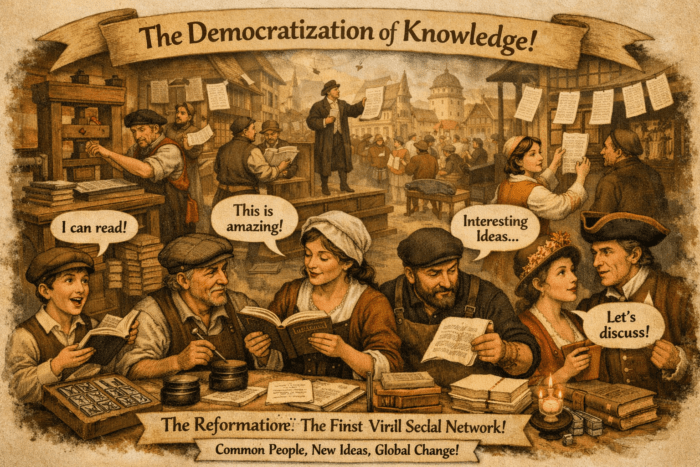
For the first time in human existence, the “common man, woman, and child” could lay their hands on actual books. This fueled global literacy loops and birthed an entirely new, deeply critical bourgeois public sphere.
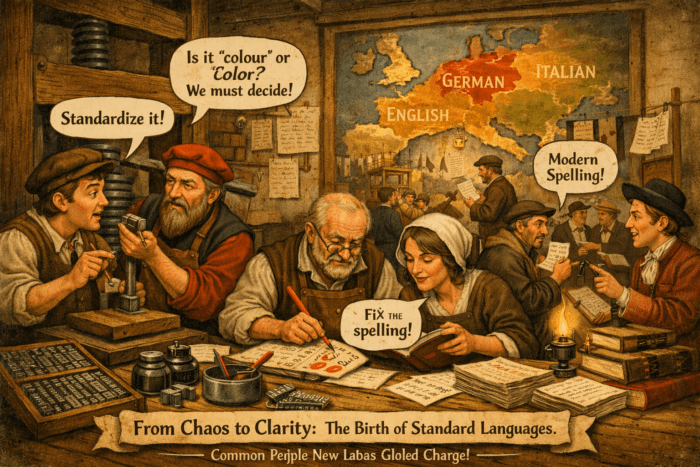
Language Standardization
Before the press, regional spelling and grammar rules were absolute chaos. The mechanical demand for mass duplication forced printers to pick standard forms, single-handedly turning fragmented, local oral dialects into the unified national languages we type today, like Modern Standard English and German.
ART EDUCATION REFLECTION BOX
Pro Proportional Tip: Whether you are currently rendering a massive, multi-muscle “Heroic” Thor at an 8.5-head ratio or just casual sketching in your pad, you are using structural proportions made standard by the very print networks Gutenberg unleashed.
Today, the printing press stands unchallenged as one of the single most disruptive technological vectors of the millennium, effortlessly carrying human civilization out of the dark
Medieval shadows right into the vibrant Modern age. Every single time you view a design layout, load a digital font file, or read an educational blog on your phone, you are interacting directly with the massive genetic lineage of a machine that took the quiet, whispered thoughts of isolated thinkers and amplified them into an open global conversation.